


What the Future of Work Means for Smart Office Fit Outs

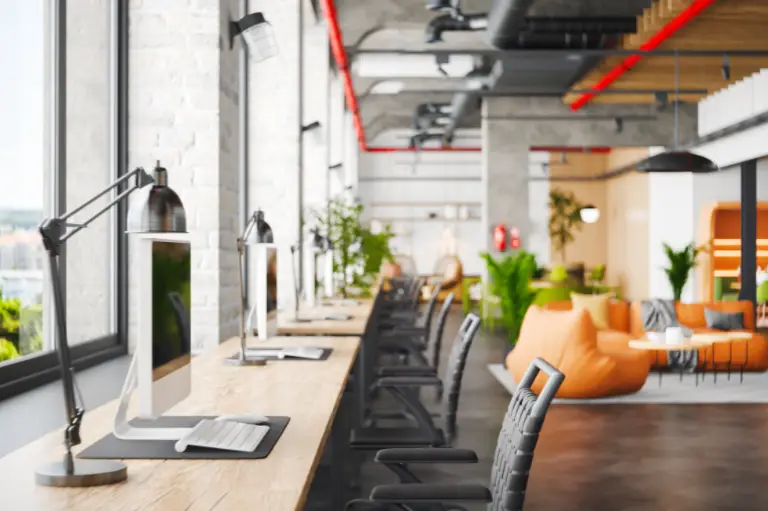
What the Future of Work Means for Smart Office Fit Outs
The future of work is changing how offices are planned and managed across the UK. Hybrid working, digital collaboration, and employee wellbeing are now commonplace, yet many workplaces are still designed for full-time occupancy and fixed working patterns.
This affects day-to-day performance. Meeting rooms may be underused, desks sit empty on certain days, and workplace technology does not always support hybrid collaboration. The root issue is often how space, infrastructure, and systems are planned together.
In practical terms, the future of work requires:
- Flexible layouts
- Reliable technology
- Efficient use of space
Smart office fit outs support this by coordinating design, building services, and workplace systems from the outset.
Designing Offices for Unpredictable Occupancy & Hybrid Use
Hybrid working has changed how office space is used, not just how often it is occupied. Data from the Office for National Statistics (ONS) shows that 28% of working adults in Great Britain worked in a hybrid way between January and March 2025, which has reduced the predictability of daily occupancy and space demand [1].
This variability places pressure on layouts designed around fixed desks and uniform attendance. Offices increasingly need shared work settings, flexible meeting spaces, and infrastructure that allows areas to be reconfigured without disruption as usage patterns shift.
The ONS findings help explain why office fit out decisions now prioritise adaptability. Designing for fluctuating occupancy allows organisations to avoid over-provision while maintaining effective collaboration and focused work areas as working patterns continue to evolve.
Why Smart Workplace Technology Is Now a Design Priority
Smart office technologies are increasingly central to how modern workplaces reduce energy use, manage space, and improve comfort. The UK Green Building Council (UKGBC) reports that offices account for around 17% of non-domestic building emissions in the UK, underscoring the importance of operational performance in workplace design decisions [2].
The report highlights how digital building management systems, smart controls, and real-time monitoring enable heating, lighting, and ventilation to respond to actual occupancy rather than fixed schedules. This supports lower energy demand while maintaining consistent conditions for occupants.
From a fit out perspective, the UKGBC emphasises that these benefits are most achievable when smart systems are planned early. Coordinating power, data, ceilings, and partitions during the fit out stage supports future upgrades and avoids disruptive retrofitting, contributing to long-term efficiency and user comfort.
Automated Lighting & Environmental Controls
Lighting and thermal conditions directly influence how people perform at work. The Health and Safety Executive (HSE) notes that poor lighting can reduce task accuracy, while a lack of temperature control can increase stress, dissatisfaction, and long-term sickness absence [3].
HSE guidance explains that different activities require different lighting levels. Detailed work may require up to 750 lux, while circulation areas such as corridors may only need 50 lux. In open-plan offices, giving individuals control over local lighting has been shown to improve job satisfaction and reduce stress, particularly when screen-based tasks are common.
Managing glare and daylight is also important. The HSE identifies blinds as an effective way to control reflected light and changing sunlight throughout the day. When automated blinds are integrated during a fit out, they support consistent lighting and thermal comfort as part of a coordinated environmental approach.
How Smart Office Fit Outs Improve Productivity & Employee Satisfaction
Productivity in office environments is closely linked to reliability. Smart office fit outs help reduce avoidable disruption by creating consistent conditions for meetings, collaboration, and focused work, supported by dependable technology and layout planning.
This consistency supports routine behaviours such as meetings starting on time, stable hybrid calls, and fewer interruptions caused by environmental or technical issues. Over time, this reliability influences how employees perceive the office as a functional place to work rather than a source of friction.
The Chartered Institute of Personnel and Development notes that while engagement can predict later performance, the effect is often modest [4]. This reinforces the value of practical workplace improvements that remove recurring obstacles, rather than relying solely on design changes to influence engagement.
Operational Efficiency & Long-Term Cost Benefits
Operational efficiency is increasingly linked to long-term risk exposure and cost control. With buildings accounting for around 20% of UK greenhouse gas emissions in 2022, organisations face growing pressure from regulation, energy pricing, and compliance expectations [5].
The UK Parliament briefing on net zero highlights that improving building efficiency is essential for reducing long-term operating costs and avoiding future retrofit requirements. Addressing efficiency at the fit out stage allows businesses to plan proactively rather than respond to external change later.
Integrating smart systems and sustainable office design early supports more predictable operating costs and reduces the likelihood of disruptive upgrades, aligning workplace investment with long-term business resilience.
Designing Smart Offices Starts at the Fit Out Stage
Smart offices perform best when technology planning begins alongside layout and construction decisions. Retrofitting systems after completion can result in visible cabling, compromised layouts, and avoidable disruption.
During the fit out stage, coordination between designers, contractors, and IT providers ensures that power, data, ceilings, partitions, and furniture work together as a single system. This allows technology to support the workspace without dictating it later.
A structured design and build process helps ensure infrastructure remains flexible enough to accommodate future change while maintaining a clean, professional finish.
Prepare Your Office for the Future
The future of work is shaping how offices across Dorset, Hampshire, and the South of England are designed and delivered. Hybrid working and changing business needs mean workplaces must be adaptable, efficient, and able to support long-term change. Smart office fit outs align space, technology, and infrastructure to meet these requirements in a practical way.
Jade Aden Interiors supports businesses across the region with office fit outs and refurbishment projects that reflect both operational requirements and future plans. With combined experience across design, delivery, and workplace strategy, projects are planned with local building requirements, compliance, and long-term performance in mind.
Call 01425 689199 or book a consultation to discuss a smart office fit out designed to prepare your workplace for the future of work.
External Sources
[1] The Office for National Statistics (ONS), “28% of working adults in Great Britain worked in a hybrid way between January and March 2025”: https://www.ons.gov.uk/employmentandlabourmarket/peopleinwork/employmentandemployeetypes/articles/whohasaccesstohybridworkingreatbritain/2025-06-11
[2] The UK Green Building Council (UKGBC), “offices account for around 17% of non-domestic building emissions in the UK”: https://ukgbc.org/wp-content/uploads/2024/01/Retrofitting-Office-Buildings-Building-the-Case-for-Net-Zero.pdf
[3] The Health and Safety Executive (HSE), “poor lighting can reduce task accuracy”: https://www.hse.gov.uk/humanfactors/topics/lighting.htm
[4] The Chartered Institute of Personnel and Development, “the value of practical workplace improvements that remove recurring obstacles”: https://www.cipd.org/globalassets/media/knowledge/knowledge-hub/evidence-reviews/employee-engagement-discussion-report_tcm18-89598.pdf
[5] The UK Parliament, “buildings accounting for around 20% of UK greenhouse gas emissions in 2022″: https://researchbriefings.files.parliament.uk/documents/CBP-9888/CBP-9888.pdf