


How to Choose Office Fit Out Furniture for Productivity

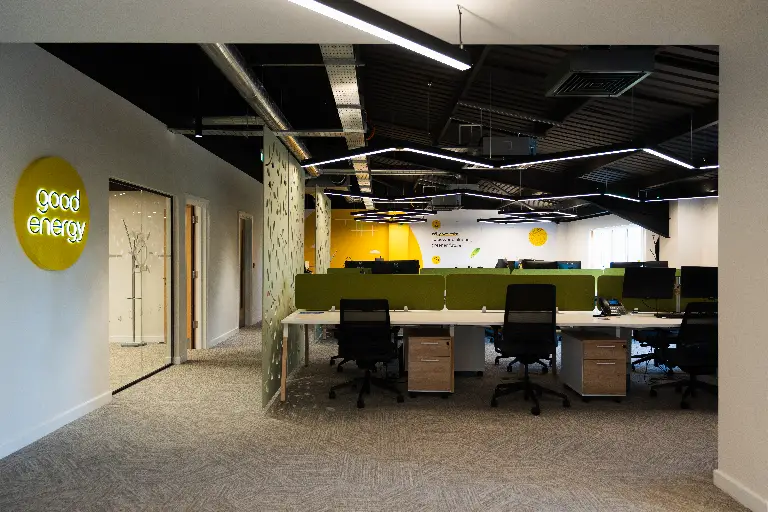
How to Choose Office Fit Out Furniture for Productivity
Office fit out furniture affects how teams work each day. Desks, seating and shared spaces influence posture, comfort, concentration and how efficiently people move through the office. When furniture is poorly planned, issues often surface gradually, including cramped desks, noisy meeting areas, cluttered walkways, or seating that does not correctly support users.
These problems usually arise when furniture is selected in isolation, without considering how people work, collaborate or focus throughout the day. Productivity suffers when layouts work against daily routines rather than supporting them. A productive specification starts with how work happens in practice. This includes ergonomics, layout, storage and the balance between focused work and collaboration.
This guide shows you how to pick office fit out furniture that boosts productivity. It covers practical tips for businesses to create workspaces that enhance performance, comfort, and long-term value.
Define how The Office Needs to Work and Maintain Brand Consistency
Start with a clear view of how the office is used now, and how it may change. Office fit out furniture should support daily tasks, team size, working patterns and future growth, while maintaining a consistent and professional environment for staff and visitors.
When planning requirements, agree on the decision criteria early and document them. This keeps furniture selection consistent across departments and reduces rework during procurement.
Focus on:
- Input from staff who will use the furniture daily
- Task-based needs for each team and role type
- Measurements of key areas to confirm clearance and access
- Standards for finishes that reflect the brand and building use
- A simple approval process to prevent last-minute changes
This stage is also the right time to define what success looks like, such as improved storage capacity, fewer workstation issues, or a more consistent visitor experience. These checks support smoother specification during design and build.
Prioritise Ergonomics for Sustained Performance
Ergonomics is a practical requirement when choosing office fit out furniture for productivity. The Health and Safety Executive (HSE) states that if staff use display screen equipment daily as part of normal work, continuously for an hour or more, employers must carry out a workstation assessment [1]. It should cover the entire workstation, including furniture, equipment, and work conditions, as well as the job and any individual needs.
The HSE also states that employers must provide training and information for display screen equipment users, including guidance on good posture [2]. A standard setup includes the top of the screen at eye level and about an arm’s length away, the keyboard just below elbow height, lower back support, and a gap of 2 to 3 cm between the seat front and the back of the knee.
Specify adjustable chairs and desks that meet these requirements, with a central screen position, aligned keyboard and mouse placement, and cable management to keep the workstation clear. For prolonged laptop use, the HSE advises using a separate keyboard and mouse so the screen can be elevated.
Select Desks and Workstations that Suit Different Teams
Desk and workstation selection should reflect how teams work, not simply how much space is available. Productivity improves when furniture supports task requirements, movement through the day, and access to shared resources.
For many offices, a mix of desk types is appropriate. Bench desks can support collaborative teams, while individual desks suit roles that require concentration or confidentiality. Reception desks and executive workstations also need careful planning to balance storage, accessibility and presentation.
When reviewing desk options, consider the following factors together:
- Privacy needs for confidential or screen-based work
- Benching layouts that allow monitor arms and cable routes
- Leg clearance and seating position for different user heights
- Storage strategy that supports hot desking and shared zones
These decisions are often most effective when coordinated with refurbishment works, where desk layouts and services can be planned together. Further context on this approach is available through our office refurbishment services.
Plan Collaborative Furniture as Part of The Overall Layout
Collaborative furniture should be planned as part of the overall office layout, with a clear intent for how people meet, share information and move between work zones. Productivity is easier to maintain when collaboration areas are positioned to support teamwork without disrupting focused desk work.
The Office for National Statistics (ONS) reported that output per hour worked in Quarter 3 (July to September) 2025 was 3.1% higher than its 2019 average, with output per worker 2.1% higher over the same period [3].
Collaborative furniture should therefore be planned around how teams actually meet, including the frequency, group size, and need for privacy. This helps avoid collaboration areas becoming walkways or overflow desk space.
Furniture choices that support this approach include:
- Breakout seating positioned away from desk clusters to reduce disruption
- Modular tables sized for the most common meeting group
- Acoustic booths or enclosed pods for calls and video meetings
- Meeting room layouts that support hybrid discussions without crowding
- Clear booking and storage provision so spaces stay usable
Clear zoning allows teams to collaborate efficiently and return to focused work with fewer interruptions.
Consider sustainability and long-term value
Sustainability and long-term value should be considered together when choosing office fit out furniture, particularly where organisations want to reduce waste, extend service life and manage replacement costs.
The Government Buying Standard for office furniture sets out a procurement hierarchy that prioritises reuse and refurbishment before purchasing new items [4]. It also requires value for money to be assessed over the furniture’s whole life, rather than just the upfront cost.
Key sustainability and quality checks set out in the standard include:
- Furniture designed for disassembly so it can be reused, repaired, refurbished and recycled
- Spare parts available from the supplier for at least five years after the sale
- Timber sourced from legal and sustainable supplies under the UK timber procurement policy
- Durability and fitness for use that meet relevant UK technical and quality standards
- Desktop details provided as CAD drawings to support future refurbishment
Sustainable office design principles support predictable lifecycle planning and reduce the need for early replacement.
Making Furniture Decisions that Support Productivity
Choosing office fit out furniture for productivity works best when decisions are made against clear requirements for tasks, comfort and space use. This supports consistent performance, reduces the risk of rework, and helps maintain a professional environment for staff and visitors.
Jade Aden Interiors provides office fit out support across Dorset, Hampshire and the South of England, including furniture specification as part of a coordinated approach to layout, workflow and overall design.
Call 01425 689199 or book a consultation to discuss your office fit out furniture requirements and plan your workspace.
External Sources
[1] The Health and Safety Executive (HSE), “workstation assessment”: https://www.hse.gov.uk/msd/dse/assessment.htm
[2] The Health and Safety Executive (HSE), “guidance on good posture”: https://www.hse.gov.uk/msd/dse/good-posture.htm
[3] The Office for National Statistics (ONS): https://www.ons.gov.uk/employmentandlabourmarket/peopleinwork/labourproductivity/articles/ukproductivityintroduction/julytoseptember2025andapriltojune2025
[4] GOV.UK, “The Government Buying Standard”: https://assets.publishing.service.gov.uk/media/5a750343e5274a59fa716b8d/Furniture_GBS_1407.pdf