


Why Office Decoration Items Matter in Refurbishment Projects

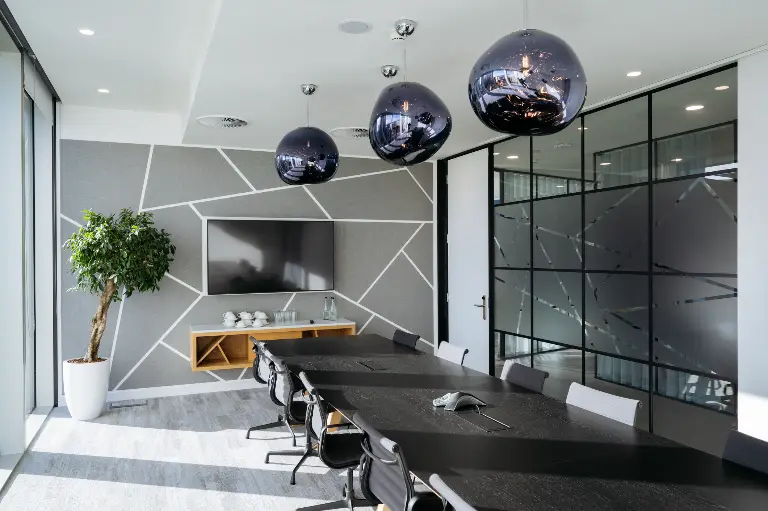
Why Office Decoration Items Matter in Refurbishment Projects
Office decoration items do more than improve appearance. In commercial refurbishment projects, coatings and preparation systems help protect interior surfaces, support safety standards and make offices easier to maintain over time.
When decoration is not specified properly, problems often appear soon after completion. Surfaces can wear quickly, maintenance cycles can increase, and the workspace can lose the professional finish expected in a commercial environment. For landlords and facilities managers, this can affect durability, compliance and lifecycle costs.
This article explains how office decoration items help refurbished offices remain durable, safe and easy to maintain.
Why Is Interior Decoration of Office Space Important?
Interior decoration helps ensure that office environments remain practical to operate and maintain. Within refurbishment projects, interior finishes influence how easily workplaces can be cleaned, maintained and adapted to daily operational requirements.
Office decoration items support several practical workplace functions:
- Surfaces that allow efficient cleaning routines.
- Finishes that maintain safe circulation routes.
- Materials suited to shared working environments.
- Coatings that support consistent workplace presentation.
- Finishes compatible with building services and interior systems.
Health and Safety Executive (HSE) guidance states that workplaces must be maintained in an efficient state and that floors, walls and ceilings must be capable of being kept sufficiently clean [1].
Decoration also forms part of wider office fit out design. Finishes must coordinate with other interior systems, so the workspace stays functional after refurbishment.
How Office Decoration Items Protect Surfaces & Extend Lifespan
Property owners and facilities managers frequently consider how interior finishes will perform between occupancies. Materials used in commercial decoration systems are therefore selected to maintain a presentable condition while limiting the need for frequent refurbishment.
Regular maintenance planning also plays a role in preserving interior finishes. The building maintenance checklist for facilities managers can help facilities teams monitor surfaces, coatings and other interior elements over time.
Typical commercial decoration systems may include:
- Coatings designed to withstand frequent cleaning.
- Finishes that reduce visible marking in shared areas.
- Protective wall coverings for circulation spaces.
- Paints formulated for longer repainting intervals.
These systems are normally applied through specialist commercial painting and decorating services that understand the requirements of occupied commercial environments.
Before decoration begins, preparation work is often required to ensure coatings perform correctly. Repairs, substrate preparation, and surface levelling are frequently delivered as part of wider commercial building works to ensure that finishing systems adhere properly and remain durable over time.
How Office Finishes Support Safety, Compliance & Workplace Standards
Interior finishes within office environments must align with the workplace safety responsibilities placed on employers and building operators. Refurbishment specifications, therefore, often consider how interior materials contribute to safe, organised and properly maintained workplaces.
The Health and Safety at Work etc. The 1974 Act places a duty on employers to ensure, so far as reasonably practicable, the health, safety and welfare of employees. The legislation also requires workplaces and access routes to be maintained in a safe condition, free of health risks [2].
In refurbishment projects, these responsibilities influence the selection of interior finishes. Materials must allow building operators to maintain workplaces safely and ensure that shared spaces remain suitable for daily use.
Decoration specifications, therefore, often consider:
- Finishes suitable for shared working environments.
- Materials that support clear circulation areas.
- Coatings compatible with routine building maintenance.
- Surfaces appropriate for regularly occupied workplaces.
Workplace quality can also influence employee wellbeing. The Chartered Institute of Personnel and Development (CIPD) reports that 29.6 million working days were lost to work-related ill health in the UK during 2023-2024, with stress, anxiety and depression accounting for 16.4 million days [3].
Maintained and organised workplaces can support more comfortable working environments. Well-presented reception areas and consistent finishes across shared office spaces help reinforce clear workplace standards and professional environments.
Where Decoration Fits Within an Office Refurbishment Programme
Decoration normally takes place during the later stages of a refurbishment programme, but its success depends heavily on earlier construction work. Surface preparation, priming, and coatings must be scheduled alongside partitions, flooring, and mechanical installations so that finishes are applied when substrates are fully prepared.
Typical sequencing within office refurbishment programmes includes:
- Removal of existing finishes and surface preparation.
- Coordination with partitions, flooring and building services.
- Priming and sealing once the substrates are ready.
- Application of final coatings.
- Inspection and snagging before project completion.
The importance of coordination is reflected in research on the construction industry. A report from the Construction Industry Training Board (CITB) highlights ongoing skills gaps in project management, planning and design, reinforcing the need for clearer coordination between trades on refurbishment projects [4].
Structured refurbishment project management helps ensure decoration work is delivered at the correct stage. Coordinating trades, materials and installation schedules reduces the risk of damaged finishes, programme delays and avoidable rework.
For facilities managers and landlords, reviewing commercial refurbishment case studies can also provide insight into how contractors have delivered coordinated projects across office environments.
Plan a Commercial Office Refurbishment
Before refurbishment, office interiors often show signs of wear, inconsistent finishes and increasing maintenance demands. After a well-planned refurbishment programme, workplaces typically become easier to maintain, safer for daily use and better aligned with the standards expected by employees, visitors and prospective tenants.
Jade Aden Interiors works across Dorset, Hampshire and the South of England, delivering commercial interior projects that focus on coordination, compliance and long-term workplace performance. From preparation and finishing to wider workplace improvements, the team supports refurbishment programmes that require structured planning and reliable delivery.
Call 01425 689199 or book a consultation to discuss your commercial office refurbishment project.
External Sources
[1] Health and Safety Executive (HSE), Workplace Health, Safety and Welfare. Workplace (Health, Safety and Welfare) Regulations 1992. Approved Code of Practice and Guidance: https://www.hse.gov.uk/pubns/books/l24.htm
[2] GOV.UK, Legislation, Health and Safety at Work etc. Act 1974: https://www.legislation.gov.uk/ukpga/1974/37/section/2
[3] The Chartered Institute of Personnel and Development (CIPD), Employee Health and Wellbeing: https://www.cipd.org/uk/views-and-insights/cipd-viewpoint/employee-health-wellbeing/
[4] Construction Industry Training Board (CITB), Understanding Future Change in Construction: https://www.citb.co.uk/media/nivld0wk/understanding-change-final-report-oct_2010_tcm17-26341.pdf